
Minerals for healthy teeth and gums
 In addition to observing the rules of hygiene, diet is important for maintaining oral health. Thanks to the vitamins and minerals contained in foods, teeth and gum tissue remain strong and resistant to the aggressive effects of bacteria. The main helpers in this matter are minerals responsible for the formation and condition of the enamel and bone tissue of the teeth:
- calcium
- phosphorus
- fluorine
- magnesium.
Calcium is a substance involved in the formation of bone tissue and mineralisation of teeth, as well as in many other processes in our body. Without sufficient dietary intake of calcium (we are unable to produce this component ourselves), the body begins to remove it from the bones to use it for more important daily tasks. Calcium deficiency is difficult to notice immediately, and a long-term lack of it can lead to enamel demineralisation, which makes teeth fragile and sensitive to mechanical and thermal stress.
To avoid this, it is necessary to control the calcium content in the blood and maintain its adequate level by adjusting the diet or taking special supplements.
The daily calcium intake for adults ranges from 1000 to 1200 mg, depending on age and associated factors. To get the required amount, the diet should include dairy and fermented dairy products, cheese, nuts, legumes, and chicken eggs.
Another mineral that keeps the oral cavity healthy is phosphorus. This substance binds to calcium and increases the density of enamel and bone structures. In addition, phosphorus reduces the acidity of microbial waste products that provoke the development of caries. Other functions include restoring damaged areas of tooth enamel and maintaining the acid-base balance.
The daily requirement for phosphorus is about 1000 mg. Deficiency can be avoided by including animal products in your daily diet, including poultry (turkey, chicken), seafood (especially salmon, shrimp), milk, yoghurt, and legumes (lentils, chickpeas).
Fluoride, or its compound fluoride, protects tooth enamel from demineralisation and caries, provides antibacterial effects, and is important for preventing tartar formation and inflammation and bleeding gums. Therefore, its deficiency directly affects dental health. However, unlike phosphorus, which enters the body with food, you can provide your teeth with a sufficient amount of fluoride with the help of toothpaste. Professional teeth cleaning and fluoridation procedures performed by dentists at Dent-House with the use of safe fluoride compositions are also effective.
 Magnesium is involved in the process of calcium absorption, in the formation of bone structures and the development of connective tissue, in strengthening and protecting enamel, and in regulating carbohydrate synthesis. Lack of this mineral is manifested in loss of appetite and sleep disturbances, fatigue and nausea. Greens, buckwheat and rice cereals, fresh apples and other fruits, dried apricots, rye bread, and wheat bran are the most rich in magnesium.
The benefits of vitamins
No less important for healthy teeth and gums are vitamins, which can also be obtained from food and special supplements. There is a group of components that are most useful for the oral cavity. These are vitamins D, C, A, and K.- Vitamin A is essential for maintaining healthy teeth and gums. This vitamin is involved in the formation of enamel, its restoration in case of damage, as well as in the process of saliva production. Saliva, in turn, naturally cleanses the oral cavity from pathogenic bacteria, which reduces the risk of infections. In addition, as a powerful antioxidant, vitamin A can reduce inflammation. Its main sources are carrots, sweet peppers, fish and egg yolks.
- Vitamin C, also known as ascorbic acid, is found in a large number of fruits, berries and vegetables. Its deficiency leads to scurvy. In addition to maintaining healthy gum tissue, vitamin C also prevents the formation of plaque. The source of this vitamin is citrus fruits, berries, and cabbage.
- Vitamin D is important for the health of the whole body. It promotes the absorption of calcium and phosphorus, without which strong bones and teeth are unthinkable. This component also regulates the production of substances in saliva that can inhibit the growth of harmful bacteria. A deficiency of this vitamin can weaken teeth and the soft tissues surrounding them, increase the risk of periodontal disease, and even lead to the loss of dental units. Vitamin D is synthesised by the body under the influence of sunlight and is also supplied by foods such as fish, milk and eggs.
- Vitamin K2 (menaquinone) is synthesised by bacteria in the intestinal flora and activates osteocalcin, which is responsible for the accumulation of calcium in bone tissue. Together with vitamin D, K2 strengthens teeth. It also regulates the synthesis of cytokine proteins involved in the body’s immune response and the repair of damaged tissues.
What can help maintain dental health?
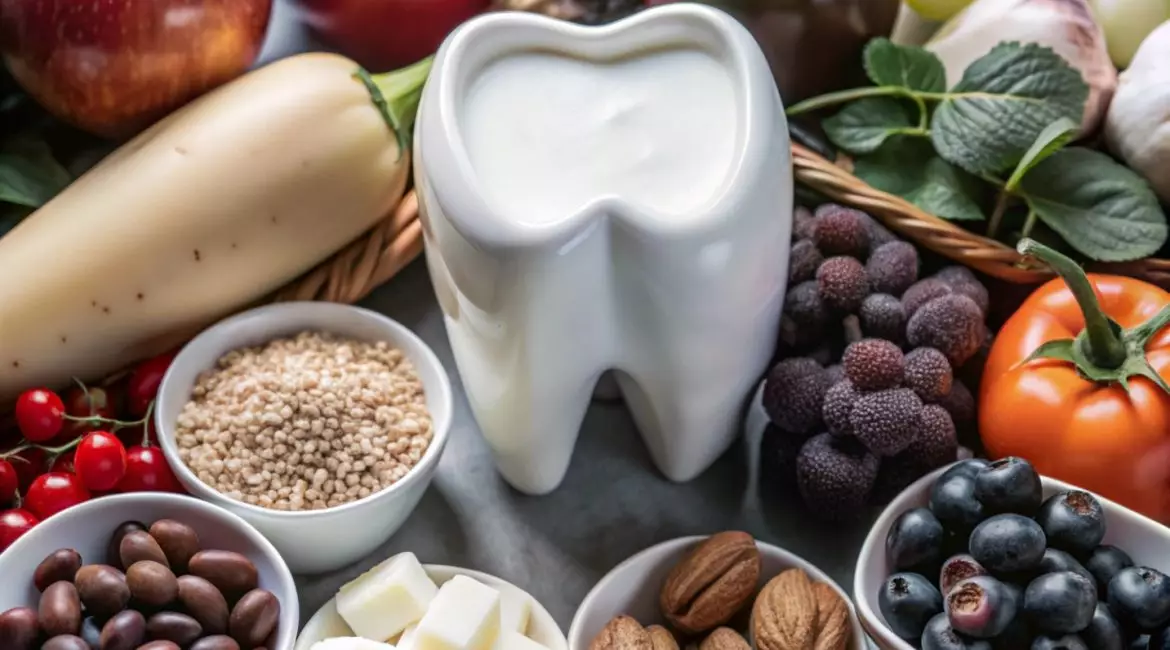
The main prevention of dental problems involves adherence to the rules of oral hygiene and a balanced diet. It is important to have foods containing sufficient amounts of nutrients in your daily diet. For example, calcium-rich dairy products, leafy greens, and almonds can help strengthen teeth and bones. Citrus fruits and strawberries can help prevent gum disease. Foods high in fibre, such as apples and carrots, stimulate the production of saliva, which helps prevent plaque formation. In addition, it is important to drink plenty of water to maintain water balance and moisture in the mucous membranes, and water helps to wash away food particles in the mouth.
Prevention of tooth decay and erosion is also achieved by reducing the consumption of sweet and sour foods and drinks. After eating them, you should rinse your mouth thoroughly.
For professional oral hygiene, you should visit a dentist once every six months, and you can also have your teeth whitened once a year or less. If necessary, remineralisation or fluoridation may also be recommended.
It is better to discuss the use of vitamins and minerals in the form of medicines with your doctor, who will select the optimal set of supplements for each specific case, taking into account the clinical picture.