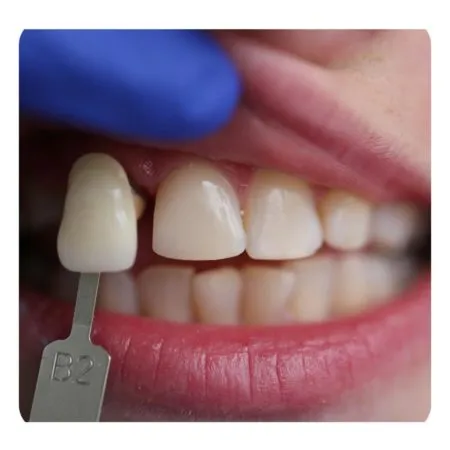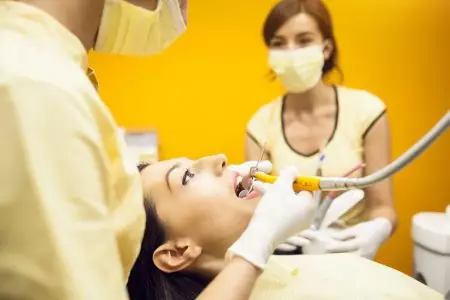


Bruxism is not dangerous in itself, but it can indicate the presence of functional disorders in the body and lead to the gradual destruction of tooth enamel. The result is damaged teeth that require treatment.

Signs and symptoms of bruxism
The manifestations of bruxism can be more or less pronounced, from one or two cases per night to regular spasms that provoke tension and pain in the jaw and head. The more pronounced the symptoms of bruxism become, the greater the problems with dental and oral health this pathology can provoke.In children, this syndrome can be caused by jawbone growth and tooth renewal. And often the teeth grinding goes away on its own. The manifestation of bruxism in adults should be treated with special attention, as it may indicate health problems.
At the same time, the person himself or herself usually does not hear that they are grinding their teeth and does not wake up at night. You can suspect bruxism based on indirect signs:
- crunching and pain in the jaw, numbness;
- increased tooth sensitivity, toothache;
- headache, in particular, ringing or pain in the ears;
- frustration, anxiety, irritability in the morning;
- Symptoms are usually pronounced immediately after waking up.
How to recognise bruxism: diagnostic methods
Different types of tests can be prescribed to determine bruxism. One of them is polysomnography. This test records the contraction of the masticatory muscles during sleep.A simpler and more effective method is the installation of brux checkers. This is the name of special mouth guards that are made according to an impression of the patient’s jaw. They are worn overnight and returned to the doctor after a while to examine the condition of the mouthguard. In this way, specialists will determine the presence of occlusal obstacles and those teeth and areas that are subjected to maximum stress during nighttime teeth grinding.
The Dent-House family dentistry clinic uses the Teethan myograph to examine the muscles and peripheral nerves of the dentition. During myography, a number of parameters are recorded, such as bite, symmetry, centre of gravity, muscle function and jaw condition. This device is also used to prepare for dental restoration, prosthetics and implantation.
Complications of bruxism
Uncontrolled nighttime teeth grinding inevitably leads to the deterioration of teeth and the oral cavity:- tooth enamel abrasion and caries development;
- increased sensitivity of the teeth;
- the appearance of cracks and chips;
- periodontitis, stomatitis, loosening of teeth;
- reduced service life of dentures, abrasion and loss of fillings;
- pain in the jaw and neck.
Effective ways to deal with bruxism
To cure a disease, you need to eliminate its causes. In the case of bruxism, this is not so easy to do, as it has not yet been established exactly what causes nighttime teeth grinding.Most doctors believe that nighttime teeth grinding is caused by increased tone of the chewing muscles, which can be caused by abnormal jaw structure, pathological changes in the joints and dental diseases.
 According to some studies, bruxism can be inherited. If one of the parents has the problem, the likelihood that the child will develop it increases by 2 times.
In addition, teeth grinding at night is often recorded in people who are in a state of constant psycho-emotional stress. Most often, these are people whose activities are related to management, business or other areas where a person has a lot of responsibility. In this case, it is generally believed that bruxism is caused by a person’s psychological state, provoked by psycho-emotional stress or a sense of anxiety and unease.
Teeth grinding can be associated with disorders of the central and peripheral nervous system. These pathologies lead to spasm of the facial muscles and, as a rule, have other manifestations. These can include sleep problems, tremors, enuresis, and epileptic conditions.
According to the osteopathic theory, bruxism occurs as a result of skull defects, as well as diseases of the cervical spine and poor posture.
For their part, dentists observe that manifestations of bruxism are often accompanied by disorders in the structure of the dentition, as well as the detection of defects in the installed prostheses and fillings. We are talking about malpositioned teeth and bite defects, impaired dentition integrity, incorrectly selected dentures or overbite fillings. It is assumed that due to such misalignments, there is an uneven distribution of the load during chewing, which leads to disorders in the jaw muscles, in particular, to spasms at night.
These are the main causes of teeth grinding during sleep that need to be addressed.
Even at the stage of identifying the cause of the disease, it is necessary to stop the abrasion of tooth enamel. In this case, you should use a special protective mouthguard, which is worn at night. It is made based on measurements and casts of the patient’s jaw in the laboratory of the Dent-House clinic. Using a mouthguard, you can get rid of the symptoms of bruxism and some negative consequences for the body, including headaches. However, a mouth guard is a temporary technical solution.
To get rid of bruxism, it is often necessary to undergo comprehensive treatment, including psychotherapy, dental correction and medication. If bruxism is a symptom of an already diagnosed neurological disorder, you should undergo treatment by a specialist.
In addition to treating dental pathologies provoked by nighttime teeth grinding, dentists solve another important problem – the elimination of supercontact points. This refers to the areas of the teeth that bear the greatest load. When the teeth close together, pressure is applied to the primary contact points before the rest of the teeth are joined, and they are subjected to excessive stress, abrasion, and decay. This is a common occurrence in the case of tooth displacement, unsuccessful filling or prosthetics, and can lead to rapid tooth decay in cases of bruxism.
Such places of supercontact are eliminated by gentle grinding. If bruxism were caused only by the presence of supercontact areas and uncontrolled muscle pressure during sleep, then hardware alignment of these areas can also eliminate nighttime teeth grinding.
Bruxism in children: what parents need to know

Bruxism in children can be both normal and pathological. Much depends on the age: if a child grinds his or her teeth before the age of 6-7, no treatment is usually required, and the problem disappears with age. If the bruxism persists, the doctor prescribes treatment, which may include drug therapy, dental procedures, psychotherapy and relaxation.
Contrary to the old stereotype, sleep grinding is not a symptom of parasitic infestation in children.
Prevention of bruxism
If the main cause of the disease is severe stress and a negative psycho-emotional background during the day, prevention is the best way to counteract nocturnal bruxism.Soothing procedures such as warm baths before going to bed, warm compresses to reduce tension in the masticatory muscles, and calming activities such as reading books or meditation will have the greatest effect.
During the day, do not close your teeth when you do not need to. You can eat hard fruits at night, crushing which will tire and soothe the jaw muscles. But strong tea, coffee, and carbohydrates that excite the nervous system should be avoided during the last meal.