
Content[ hide ]
- Veneers and crowns: what’s the difference
- Indications for placement: what suits whom
- Procedure and duration: what you need to know before choosing
- Materials and appearance: aesthetics and durability
- Post-installation care and possible complications
- Dentist’s advice: how to choose the best option for you
- Appointment booking
Veneers and crowns: what’s the difference
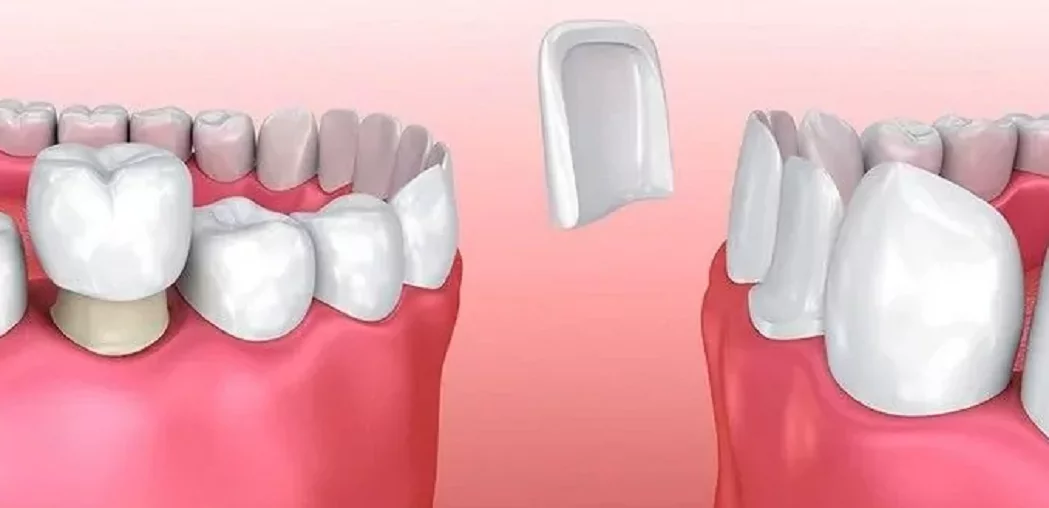
At first glance, veneers and crowns look similar—both cover the tooth and improve its appearance. However, that’s where the similarities end. The difference between them is fundamental:- Veneers are thin shells, 0.3–0.7 mm thick, that are bonded to the outer surface of the tooth. They can be used to improve the tooth’s appearance and correct its shape or color. To place a veneer, the dentist removes a thin layer of enamel from the front surface—usually no more than 0.5 mm. The tooth remains alive, and its structure is barely affected. The main function of veneers is aesthetics. The laminates also protect the enamel from the effects of hot and cold foods and external damage.
- Crowns are “caps” that completely cover the tooth. They are most often placed when a tooth is severely damaged or decayed. They are necessary to restore not only the aesthetic but also the chewing function. To place a crown, the tooth must be ground down on all sides. In many cases, the tooth is devitalized—that is, the nerve is removed—before the restoration is placed.
Indications for placement: what suits whom
The choice between a veneer and a crown always begins with a diagnosis. The dentist assesses the condition of the tooth, the amount of remaining tooth structure, and the functional load—and only then makes a recommendation regarding the restoration.When a veneer is appropriate
Veneers are suitable for teeth that are functionally healthy but have aesthetic flaws. The main indications are:- yellowing or stubborn stains that cannot be removed by whitening;
- small chips or cracks in the enamel;
- minor irregularities in tooth shape or size;
- small gaps between teeth.
When a crown is needed
A crown is suitable for teeth with severe damage or following extensive treatment. The main indications for placement are:- a tooth destroyed by more than half;
- a tooth after pulpectomy;
- extensive caries;
- a broken tooth;
- a tooth after root canal treatment;
- an abutment tooth for a dental bridge.

Procedure and duration: what you need to know before choosing
| Stage | Veneer | Crown |
| Number of visits | 2–3 visits | 3–4 visits |
| Procedure duration | 1–1.5 hours | 1–1.5 hours |
| Tooth preparation | A thin layer of enamel is removed from the front surface of the tooth — 0.3–0.5 mm | The tooth is prepared on all sides, with significantly more tissue removed |
| Depulpation | Usually not required — the tooth remains vital | Often required, especially in cases of severe tooth decay |
| Temporary restoration | A temporary restoration is placed while the permanent one is being fabricated | A temporary crown is placed |
| Fabrication | 7–14 days | 7–14 days |
| Fixation | Bonded to the front surface with special dental cement | Fixed with cement on all sides |
| Lifespan | 10–15 years with proper care | 15–25 years depending on the material and load |
| Reversibility | Irreversible procedure — enamel is permanently removed | Irreversible procedure — a prepared tooth always requires protection |
| Adjustment period | 1–2 weeks — slight sensitivity is possible after preparation | 2–4 weeks — especially after root canal treatment |
Materials and appearance: aesthetics and durability
The appearance and lifespan of a veneer or crown depend primarily on the material. Each has its own advantages and disadvantages. Let’s consider the main material options for veneers:- Ceramic — the most common and aesthetic option. Ceramic looks beautiful, does not discolor over time, and does not irritate the gums. Lifespan: 10–15 years. This is the optimal choice for front teeth and for those who want a “Hollywood smile.”
- Zirconia veneers are stronger than ceramic ones and can withstand greater stress, but they look less natural. They are suitable for patients with bruxism or excessive stress on their teeth.
- Composite veneers are the most affordable option. They look less natural than ceramic, discolor more quickly, and last 3–5 years. They are suitable as a temporary or budget-friendly solution.
- Metal-ceramic crowns. Durable and relatively affordable. The main drawback is the metal rim at the gum line, which becomes noticeable over time, especially as the gums recede. Suitable for molars.
- All-ceramic crowns. They provide the best aesthetic result, as they closely resemble a natural tooth. They have no metal base. Suitable for front teeth and patients with metal allergies.
- Zirconia crowns. They withstand significant chewing pressure, last up to 25 years, and look natural. Today, this is the most popular material for both front and back teeth.
- Metal crowns are the strongest and most durable, but they are aesthetically inferior to all other options. They are used primarily for back teeth, as the structure is less noticeable in the mouth.
Post-installation care and possible complications
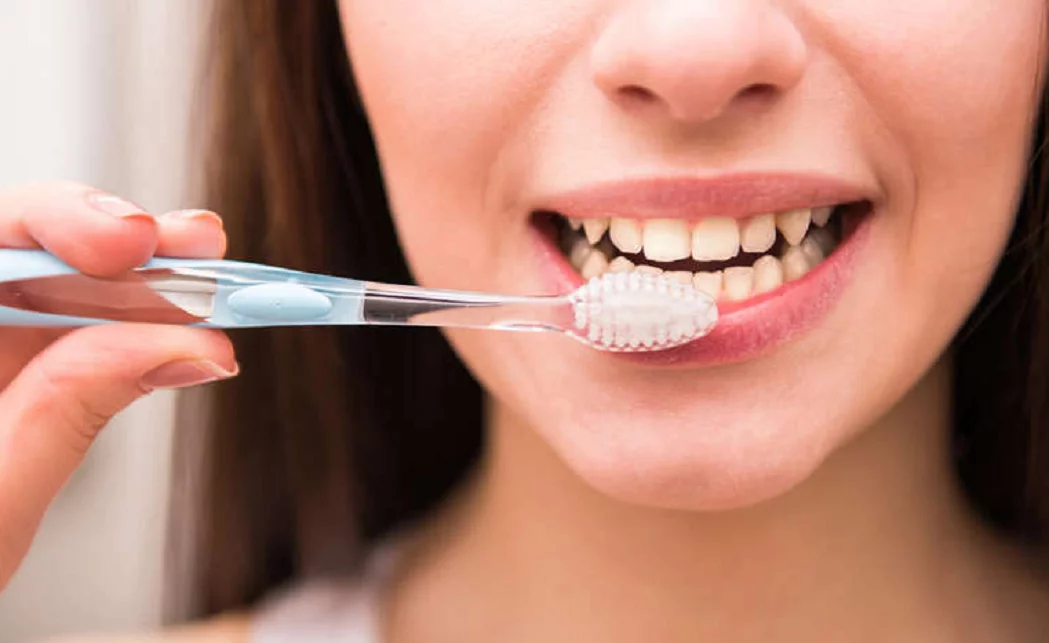
Teeth fitted with crowns or veneers require mandatory care. The care guidelines are the same:- Brush your teeth twice a day with a soft-bristled toothbrush and toothpaste that does not contain abrasives or whitening agents—these can damage the surface.
- Use dental floss and a water flosser, especially in the area between the restoration and the gums—this is where plaque most often accumulates.
- Visit your dentist every 6 months for a preventive checkup.
- Increased sensitivity after placement. This usually subsides after a few weeks.
- Detachment or loosening. This occurs due to excessive stress or trauma.
- Chip or crack. This is most often the result of an impact or stress. A small crack can sometimes be repaired, but more often the restoration is replaced.
- Cavities under the crown. Develops unnoticed with poor hygiene in the gum area.
- Gum inflammation. Occurs if the edge of the restoration does not fit snugly or injures the tissue. It manifests as redness and bleeding.
Dentist’s advice: how to choose the best option for you
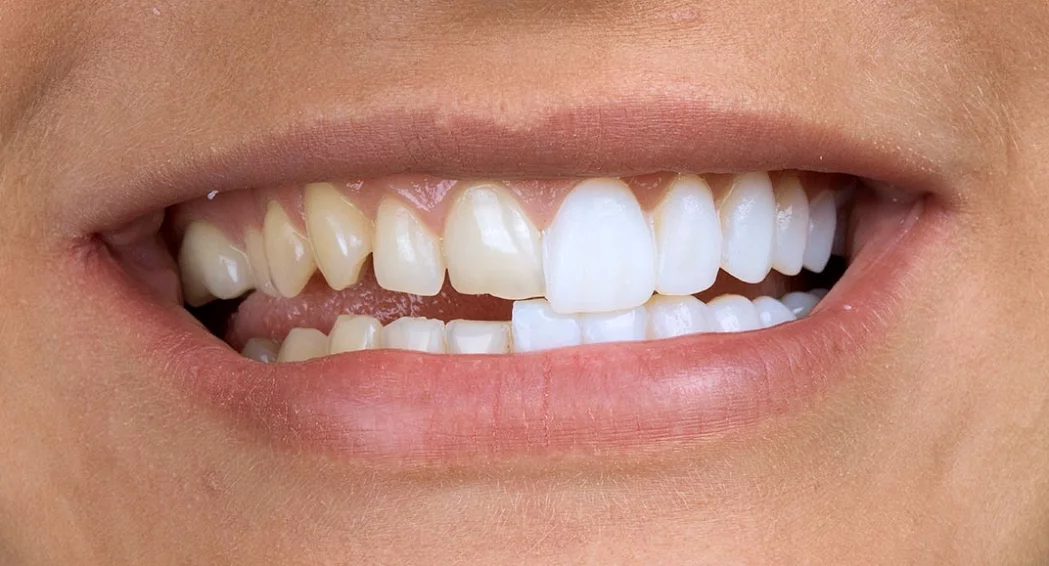
Only a dentist can tell you whether to choose a crown or a veneer. However, there are a few guidelines that will help you decide which direction to go:- if the tooth is alive and almost intact—consider a veneer;
- the tooth is more than half destroyed — only a crown;
- the tooth has undergone root canal treatment — a crown is mandatory; without it, the tooth will break quickly;
- the issue is purely aesthetic — choose veneers;
- the tooth is a molar — a veneer won’t work; a crown is needed;
- you have bruxism — discuss zirconia with your dentist: it withstands stress better than ceramic;
- if your budget is limited — consider a metal-ceramic crown or a composite veneer.