
Content[ hide ]
- What is stomatitis: definition and main types
- Why stomatitis occurs: main causes in children and adults
- Symptoms of stomatitis: how to recognize the condition
- Photos of stomatitis: examples of manifestations on the oral mucosa
- Diagnosing stomatitis: when to see a doctor
- Stomatitis in children: characteristics of the course and treatment
- Stomatitis in adults: differences and tips
- Possible complications of stomatitis
- Tips for preventing stomatitis: hygiene and proper nutrition
- Appointment booking
What is stomatitis: definition and main types
Stomatitis is an inflammation of the oral mucosa. It can occur on the inside of the cheeks, gums, tongue, palate, or lips. Visually, stomatitis appears as red spots, swelling, or ulcers—depending on the type and stage. Stomatitis is classified according to several criteria—the cause, the nature of the mucosal lesion, and the duration of the disease.Main types of stomatitis
| Types of stomatitis | Type | Appearance and symptoms |
| Aphthous | Common | Round ulcers with a white or yellowish coating and a red border. May occur once or recur regularly. |
| Herpetic | Viral | More common in children aged 1–3 years. It begins with a fever, followed by small blisters that burst and turn into sores. |
| Candidal | Fungal | Oral thrush. White, cottage cheese-like coating on the mucous membrane. Common in infants and people with weakened immune systems. |
| Bacterial | Bacterial | Stomatitis is caused by streptococci or staphylococci. It usually occurs following trauma or poor oral hygiene. |
| Vesicular | Viral | Appears as small fluid-filled blisters (vesicles); when these rupture, painful erosions develop. Can be transmitted from person to person. |
| Catarrhal | Mild form | The mucous membrane becomes red, swollen, and painful. No ulcers. Stomatitis occurs due to poor hygiene, tooth decay, or gastrointestinal diseases. |
| Ulcerative (necrotic) | Severe form | Deep ulcers with a gray coating, foul breath, and fever. Deep tissues are affected. Medical treatment is required. |
| Gangrenous (noma) | Dangerous | Rare form. Necrosis spreads rapidly and can affect not only the mouth but also the face. Immediate medical attention is required. |
| Denture-related | Localized | Occurs in wearers of removable dentures. The mucous membrane under the denture becomes red, and pain and a burning sensation appear. |
| Allergic | Allergic | Occurs as a reaction to food, medication, or hygiene products. Swelling and redness of the mucous membrane appear without characteristic ulcers. |
Why stomatitis occurs: main causes in children and adults
Stomatitis rarely occurs for no reason—there are almost always specific causes behind it. The most common of these are:- Infections. The causative agents can be viruses (herpes, influenza, chickenpox), bacteria (streptococci, staphylococci), or fungi (Candida).
- Mucosal trauma. A sharp edge of a tooth, hard food, accidentally biting the cheek, or careless toothbrushing can damage the mucosa and trigger inflammation. In children, this is compounded by the habit of putting toys and other objects in their mouths.
- Poor oral hygiene. Food debris, plaque, and cavities create an environment in which bacteria multiply rapidly.
- Weakened immune system. After an illness, during times of stress, or when there is a vitamin deficiency or when taking antibiotics, the body is less able to defend itself against infections. In such cases, canker sores may appear regularly.
- Allergies. This could be a reaction to toothpaste, mouthwash, medications, or certain foods. Most often, stomatitis is triggered by citrus fruits, chocolate, nuts, and certain preservatives.
- Hormonal changes. In women, stomatitis often worsens during pregnancy or the menstrual cycle due to changes in hormone levels.
- Diseases of internal organs. Problems with the intestines, stomach, blood disorders, or diabetes can manifest as inflammation of the oral mucosa.
- Dry mouth. Saliva protects the mucous membrane from bacteria. If too little is produced—due to medications, mouth breathing, or dehydration—the risk of stomatitis increases.

Symptoms of stomatitis: how to recognize the condition
Stomatitis is difficult to confuse with other conditions, as its manifestations are quite characteristic. The main symptoms are:- Ulcers and erosions on the mucous membrane. These are usually round or oval painful lesions with a white, yellowish, or gray coating and a red border around them. They may appear singly or in groups—on the cheeks, gums, tongue, palate, or inside of the lips.
- Pain and discomfort. Ulcers are painful during eating, talking, and even at rest. Spicy, salty, or hard foods increase the discomfort. This is why children refuse to eat, and adults avoid certain foods.
- Redness and swelling of the mucous membrane. These symptoms are particularly noticeable at the onset of the disease, even before ulcers appear. In the catarrhal form, this may be the only symptom.
- Increased salivation. The body reacts to inflammation by producing more saliva.
- Bad breath. This is caused by bacteria that multiply in the inflamed area and is particularly pronounced in the ulcerative and necrotic forms.
- Bleeding gums. This symptom is characteristic of ulcerative stomatitis. The gums become loose and bleed even with light touch.
- Fever. In infectious forms, especially herpetic stomatitis, the temperature can rise to 38–39 °C. In children, this is often the first sign, even before the appearance of mouth ulcers.
Photos of stomatitis: examples of manifestations on the oral mucosa
Stomatitis can look different depending on the form and stage of the disease. The photo below shows the most typical symptoms that prompt a visit to the dentist. This will help you orient yourself and understand whether your symptoms resemble stomatitis. Please note: You should not attempt to make a definitive diagnosis based on a photo alone, as some manifestations of stomatitis resemble other mucosal diseases. Only a doctor can make an accurate diagnosis after an examination.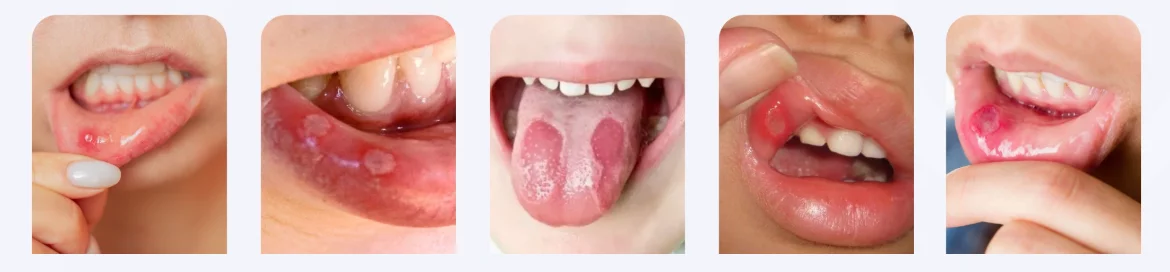
Diagnosing stomatitis: when to see a doctor
In most cases, you can recognize stomatitis on your own—based on characteristic sores, pain, and inflammation of the mucous membrane. However, only a doctor can correctly identify the type of condition and prescribe treatment. Usually, an examination of the oral cavity is sufficient for a specialist. They assess the type, size, and number of sores, the condition of the mucous membrane and gums, and the presence of plaque. In most cases, this is enough to make a diagnosis. If the cause is not obvious or stomatitis recurs regularly, the doctor may order additional tests: a swab from the mucous membrane to identify the pathogen, a blood test to check immunity and vitamin levels, allergy tests if an allergic form is suspected, a consultation with a gastroenterologist or immunologist, etc.Stomatitis in children: characteristics of the course and treatment
Children get stomatitis more often than adults because their immune systems are still developing, and they tend to put their hands in their mouths frequently. In addition, young children interact closely with their peers—infectious forms spread very quickly in daycare and school. The mucous membrane in children is also thinner and more vulnerable. The most common forms of stomatitis in children are:- Herpetic stomatitis—often occurs in children aged 1 to 3 years. The condition is caused by the herpes simplex virus. Stomatitis begins abruptly: the temperature rises to 39–40 °C, lymph nodes swell, and a large number of small blisters appear in the mouth.
- Candidal stomatitis — is typical in infants under one year of age. It often occurs after taking antibiotics or in bottle-fed infants.
- Aphthous stomatitis — is more common in older children and adolescents.
Stomatitis in adults: differences and tips
In adults, stomatitis is milder than in children. Fever is rare, sores are usually smaller, and they heal faster. Aphthous and allergic forms are common in adults. Herpetic stomatitis also occurs, but it is milder. Candidal stomatitis in adults almost always occurs against a background of weakened immunity, diabetes, or long-term antibiotic use. A separate category is elderly people with removable dentures. They often develop denture stomatitis due to poor fit or inadequate denture care. If stomatitis occurs regularly (more than 3–4 times a year), it is worth investigating the cause. The most common causes are:- chronic stress;
- deficiencies in vitamins B12, C, and iron;
- hormonal changes in women;
- intestinal or stomach disorders;
- a reaction to toothpaste containing sodium lauryl sulfate.
Possible complications of stomatitis
If stomatitis is left untreated or treated improperly, it can lead to complications. The most common is the spread of infection to the throat, tonsils, or respiratory tract. In children, dehydration is a serious risk: due to pain, the child refuses to drink, and within a few hours, their condition can worsen. Deep ulcers may leave scars on the mucous membrane after healing. Oral thrush can spread to the esophagus. Furthermore, without proper medical treatment, acute stomatitis often worsens and becomes chronic with frequent relapses.
Tips for preventing stomatitis: hygiene and proper nutrition
It is impossible to completely protect yourself from stomatitis, but reducing the risk of its occurrence is entirely possible. Most preventive tips are simple. The main thing is to follow them regularly, not just during flare-ups. The main rules for preventing stomatitis are:- Brush your teeth twice a day with a soft-bristled toothbrush; use dental floss for additional hygiene.
- Choose a toothpaste without sodium lauryl sulfate—it irritates the mucous membrane.
- Visit the dentist every six months: cavities and sharp edges on teeth can injure the mucous membrane.
- If you wear dentures, remove them at night and clean them thoroughly every day.
- Eat a balanced diet and include foods rich in vitamins B12 and C, iron, and zinc.
- Avoid foods that are too hot, spicy, or acidic.
- Drink enough water: saliva protects the mouth from bacteria, and dehydration reduces its production.
- Do not smoke, and try not to bite your cheeks or lips.
- Wash your hands before eating and do not share utensils.